Ōtari-Wilton’s Bush Trust
Facebook Instagram News
  • Home
  • About the Trust
    • Volunteering
    • Plant Sales
    • Centenary News
    • News
    • Newsletters
  • Ōtari-Wilton’s Bush
  • Restoration
  • Visiting
    • Centenary Events
    • Winter Glowworm Tours
  • Botanical Art
    • Writing about Ōtari
  • Memberships / Legacies
    • Endowment Fund / Legacies
  • Contact

News

Ōtari-Wilton’s Bush Fund - a fund for the future

The Otari-Wilton’s Bush Trust is proud to announce the establishment of the Otari-Wilton’s Bush Fund; a fund for the future of native plant conservation at Ōtari-Wilton’s Bush.

The Fund was launched with Wellington’s Nikau Foundation, at a Trust Volunteers function on February 22.

The Otari-Wilton’s Bush Fund will build a reliable funding stream, in perpetuity, to support the long-term vision of the Trust and the next chapter of Otari-Wilton’s Bush. Every dollar donated to the fund will be responsibly invested, and grants supporting the work of the Trust will be delivered every year, once the initial fundraising goal of $100,000 is reached.

The Trust has already contributed $70,000 to kick start the Fund, says Trust Chair, Dr Carol West. “This comes from generous donations from members, and income generated by volunteers involved with guided tours, plant sales and many other activities.”

Through long-term funding provided by the Ōtari-Wilton’s Bush Fund, the Trust will support Ōtari-Wilton’s Bush across several aspects, from building public awareness and appreciation of its special native plant collections and original forest, to assisting in conservation and restoration, to enhancing the visitor experience, developing educational opportunities and funding scientific research into native flora.

By gifting to the fund, you will help to ensure that Ōtari-Wilton’s Bush will continue to play an innovative, forward-thinking role in the conservation of New Zealand’s native flora, as it has for almost 100 years. Your contribution will help to pass on the joy and value of Ōtari-Wilton’s Bush to future generations.

You can donate to the Ōtari-Wilton’s Bush Fund in several ways.

Internet Banking

Westpac - Lambton Quay - 03 0502 0163248 001

Once you have donated, please let the Nikau Foundation team know by emailing with your name, address and noting that you would like to support the Ōtari-Wilton’s Bush Fund.

Donate online

You can make a donation online on Nikau Foundation’s website by visiting the page below:

https://donorbox.org/otari-wiltons-bush-fund

Leave a gift in your will

Leaving a gift in your will is a powerful way to ensure that Ōtari-Wilton’s Bush continues to be enjoyed for generations to come. To leave a bequest, please contact Nikau Foundation via .

Posted: 23 February 2024

Pā Harakeke opens at Ōtari-Wilton’s Bush

It’s more than a botanical garden collection: Pā Harakeke, now open at Ōtari-Wilton’s Bush, represents a dedicated cultural resource for weavers. Linda Lee, Ōtari Raranga WeaversLinda Lee, Ōtari Raranga WeaversLily YochayLily Yochay

Pā Harakeke contains a collection of flaxes from around the country, with varieties selected by traditional weaver and researcher, Rene Orchiston, which now form the Manaaki Whenua National Flax Collection. The flaxes were chosen for their special leaf and fibre properties, and include varieties for making kete, whāriki, piupiu and cloaks.

The concept of Ōtari’s Pā Harakeke began in 2019, when the flaxes were planted by then Team Leader Ōtari, Finn Michalak, with design input from the Ōtari Raranga Weavers.

Speaking at the official opening of the Pā, on November 9, Ōtari-Wilton’s Bush manager Tim Park said bringing people and plants together is the essence of a botanical garden.

‘These plants are able to be used, these are resources that can strengthen our cultural connections. We are really fortunate to have this collection, and to have the dedicated Linda Lee and Frank Topia, from Ōtari Raranga Weavers, to guide us.

‘We’ve decolonised the signs,’ he added, explaining that reo names had been used for each of the flaxes planted in the pā.

Tim also said he was keen for Ōtari-Wilton’s Bush to expand further into the fields of Mātauranga Māori and develop further plant collections and resources for traditional and cultural use.

Pā HarakekePā HarakekeAlong with Ōtari Raranga Weavers, a strong contingent of Pito-one based weavers, from Te Rōpū Raranga o Manaia supported the opening with karakia and tautoko waiata.

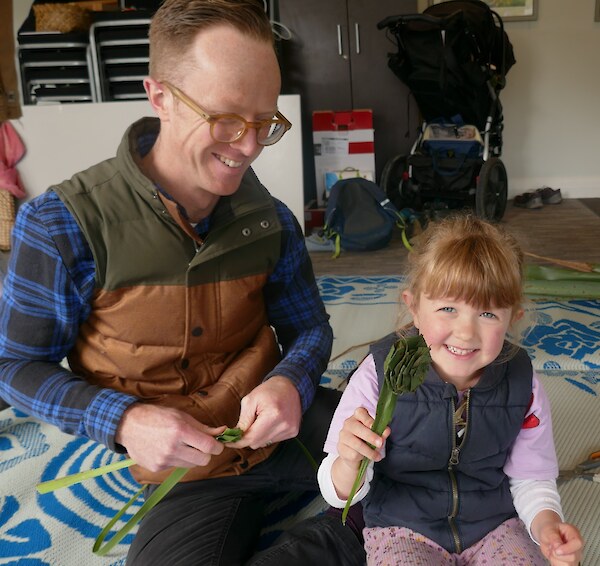
Following the formalities, people took part in a hauhake (harvest) of the harakeke, with Linda Lee explaining the harvesting protocols. Some of the harvest was put to

immediate good use at a raranga wananga (weaving lesson) hosted by Ōtari Raranga Weavers.

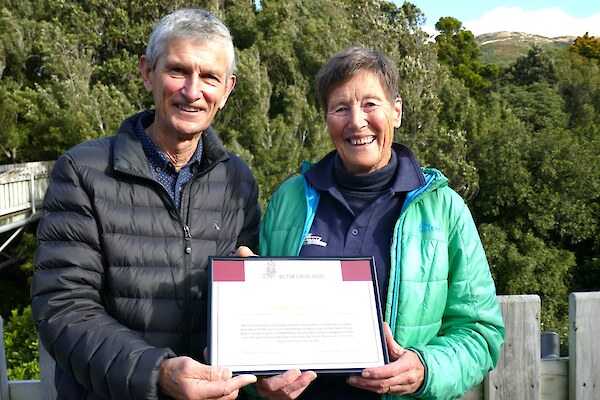
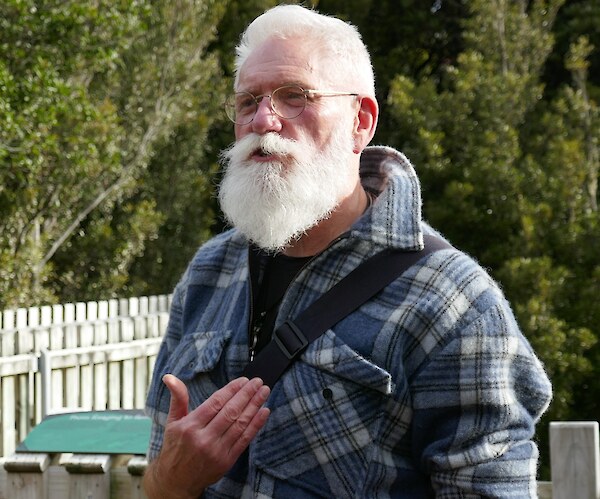
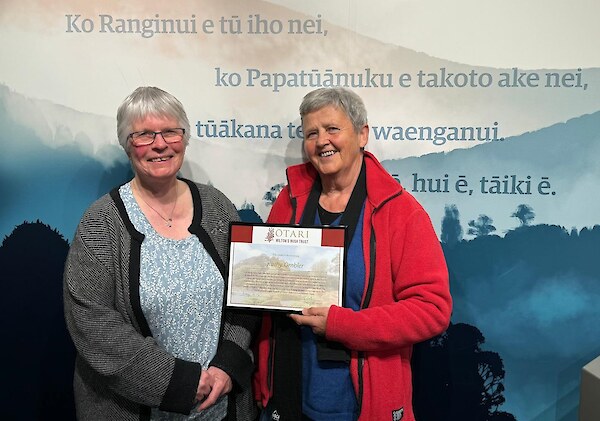
Maia-te-oho Holman-Wharehoka, Te Rōpū Raranga o Manaia
No Latin, taxonomic names for these harakeke
Frank Topia, Ōtari Raranga Weavers
Tom Belworthy, gardener and Tim Park, manager, Ōtari-Wilton’s Bush
Megan Ireland, Ōtari-Wilton’s Bush head gardener
Uenuku Phillips, Kia Mouriora Te Kaiwharawhara Sanctuary to Sea

Posted: 11 December 2023

Welcome to our new Rātā Shrine

Some visitors have been wondering about a structure that’s appeared discreetly in the Ōtari epiphyte garden. We can tell you now it is a ‘rātā shrine’, and it’s quite a story. Designer Adam Ellis works in creative fields; industrial product design and urban public gardens, integrating designed structural elements within lived landscapes (see pollen.net.nz). He also loves rātā. Years ago, supported by the then Ōtari supervisor Anita Benbrook, Adam volunteered at Ōtari-Wilton’s Bush. He said he learned so much he wanted to ‘give back’, so recently approached manager Tim Park with an idea to design a ‘living structure’ that celebrates rātā. He’s built a few other iterations around the country but none like this one. True to Ōtari’s ethos of celebrating and protecting rare native plants, this new structure features the white-flowering rātā moehau (Bartlett’s rātā, Metrosideros barlettii), which is close to extinction. Only 13 plants remain in the wild, in the Far North. Most rātā begin life as epiphytes and some grow into trees. This new tripod-shaped structure is designed to rot away over time and its supports are filled with sphagnum that will host tendrils reaching to the ground from the rātā planted at the top. It will take many years, but eventually, all going well, the plant at the top will become a self-supporting tree. We are grateful for Adam’s creative inspiration, to Ōtari staff who enabled the project, and especially for the generosity of John Randall, who funded the project as a living memorial to his late wife Robin, daughter of noted botanist, photographer and Ōtari supporter, Olaf John.

In fact, we are blessed with two flowering Rātā moehau trees in Ōtari, both grown from cuttings of the same wild individual from the Far North.

Posted: 21 October 2023

Prev page
Page 13 of 16
Next page
Return to top

© 2026 Ōtari-Wilton’s Bush Trust • Website by RS

  • Home
  • About the Trust
    • Volunteering
    • Plant Sales
    • Centenary News
    • News
    • Newsletters
      • 2025
  • Ōtari-Wilton’s Bush
  • Restoration
  • Visiting
    • Centenary Events
    • Winter Glowworm Tours
  • Botanical Art
    • Writing about Ōtari
  • Memberships / Legacies
    • Endowment Fund / Legacies
  • Contact
  • Facebook
  • Instagram